News - Evecon
Estonia Strengthens Energy Resilience: Hertz 1, One of Continental Europe’s Largest Battery Storage Parks, Opens in Kiisa

Estonia Strengthens Energy Resilience: Hertz 1, One of Continental Europe’s Largest Battery Storage Parks, Opens in Kiisa

KIISA, ESTONIA – February 5, 2026 – The Baltic Storage Platform (BSP) – a joint venture between Baltics leading renewable energy developer Evecon, French independent solar power producer Corsica Sole, and sustainable investment manager Mirova – today officially inaugurates the Hertz 1 battery energy storage system (BESS) in Kiisa.

The opening marks a historic milestone for the Baltic energy sector. Hertz 1, with its significant storage capacity of 200 MWh, is the first of two strategic projects (Hertz 1 and Hertz 2 are 100MW/200MWh each) designed to stabilize the regional power system following the Baltics’ synchronization with the European continental grid.

The project was made possible by a landmark €85.6 million financing package secured in late 2025 from the European Bank for Reconstruction and Development (EBRD), the Nordic Investment Bank (NIB), and Edmond de Rothschild Asset Management.

Strategic Impact on National Security

The commissioning of Hertz 1 represents a major leap forward in Estonia’s energy independence and grid stability. By providing rapid-response frequency regulation services, the facility ensures that the electricity network remains resilient even during fluctuations in renewable energy production or unforeseen disruptions.

Flexible services for grid stability

The facility is designed to operate across a wide range of electricity and ancillary services markets, including frequency containment reserve (FCR), automatic and manual frequency restoration reserves (aFRR and mFRR), as well as intraday and day-ahead markets, enabling flexible and responsive support to the power system.

Through its participation in multiple electricity and ancillary services markets, Hertz 1 is designed as a flexible market-oriented asset, capable of responding to system needs in real time. This operational flexibility allows the project to support grid stability, market efficiency and the integration of renewable energy, while contributing to the overall reliability of the electricity market.

Reducing Price Volatility for Consumer

Beyond grid stability, large-scale battery storage also plays a growing role in mitigating electricity price volatility. By storing electricity when production costs are low and releasing it during periods of high demand, Hertz 1 contributes to easing extreme price fluctuations that consumers have increasingly experienced in recent years, while supporting a more efficient balance between electricity production and consumption.

Large-scale battery storage is also a key enabler for the integration of low-cost renewable energy into the electricity system. By capturing surplus renewable production when availability is high and prices are low, and making this energy available when demand increases, Hertz 1 helps maximize the value of renewable generation while supporting a more efficient and reliable power system.

The Minister of Energy and the Environment of the Republic of Estonia, Andres Sutt said the project proves two things. “Firstly – private investors are capable and interested in backing large energy projects in Estonia. Secondly – the future is here. Ten years ago this would have been the largest lithium-ion battery electric park in the world, thirty years ago this would have been science fiction.”

“From now, Estonia’s energy security is significantly stronger. With Hertz 1, our electricity system has gained resilience comparable to adding a major new power plant,” said Karl-Joonatan Kvell, CEO of Evecon. “Hertz 1 is a critical piece of infrastructure that allows us to manage our energy sovereignty with confidence while accelerating the transition to clean, renewable energy.”

Technological Innovation

Located just 25 km from Tallinn, Hertz 1 features a major technical first for Estonia: a high-voltage connection to the 330 kV transmission network via an underground cable. This development enhances the physical resilience of the connection and sets a new standard for integrating large-scale storage into the national grid.

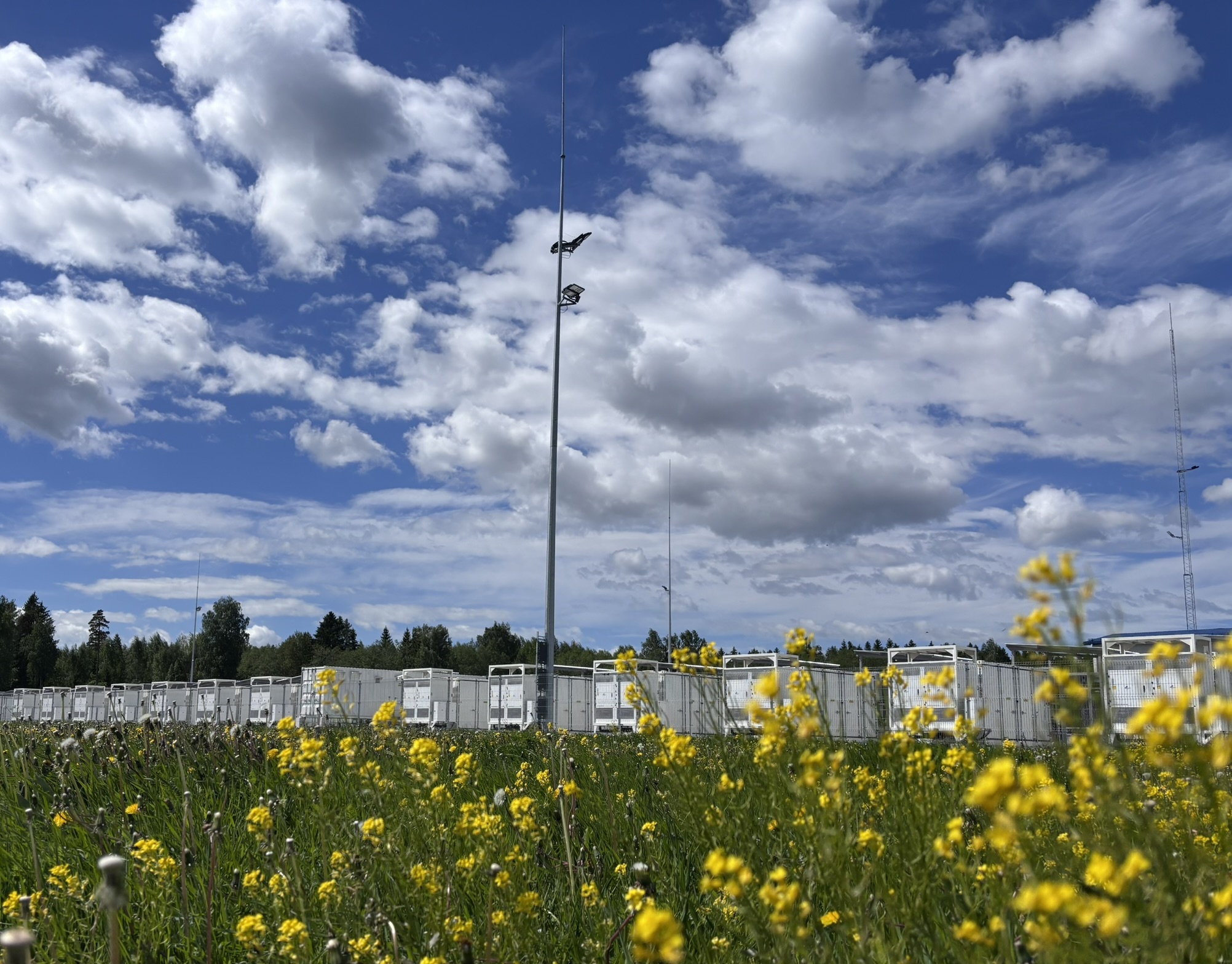
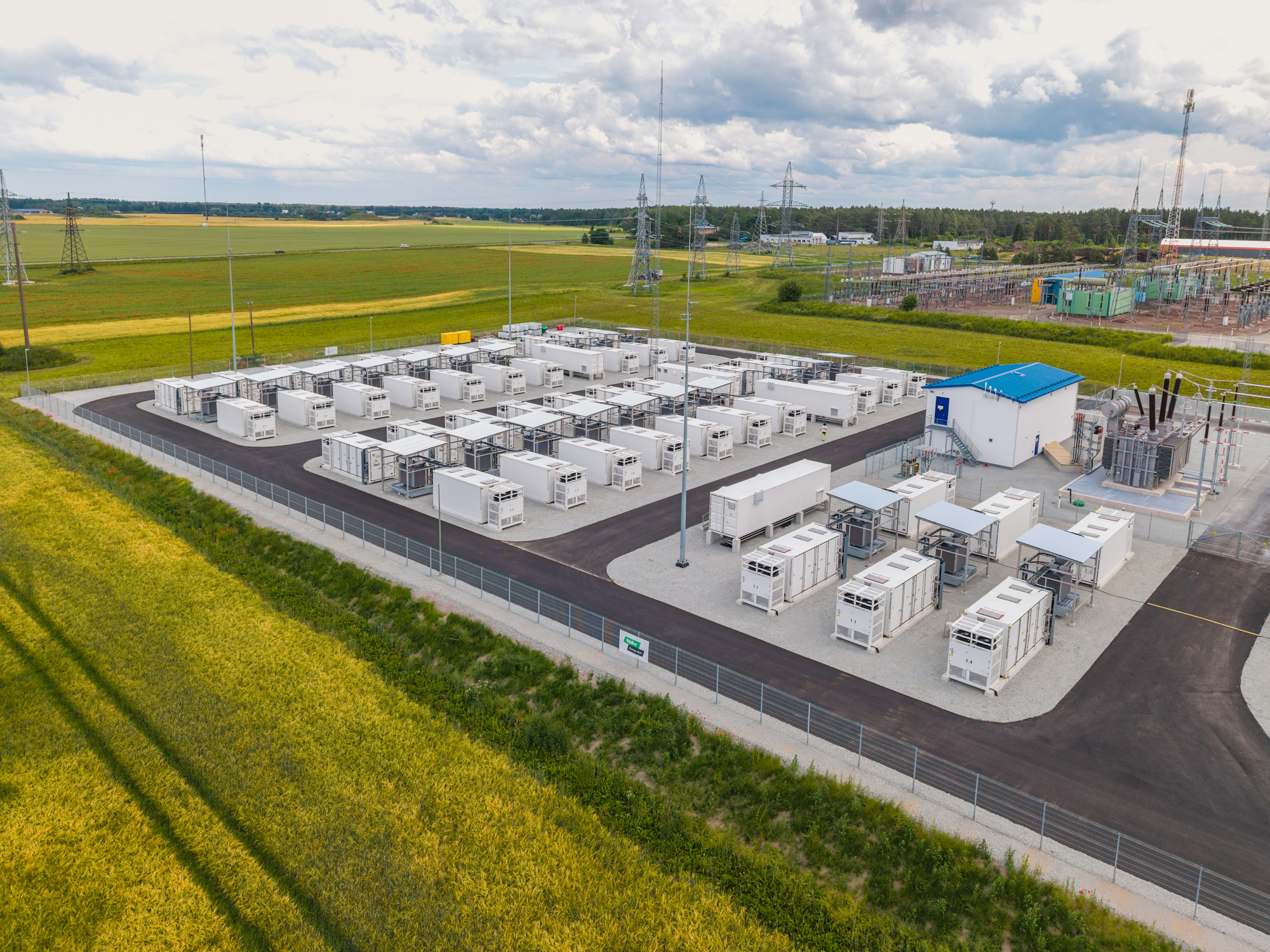
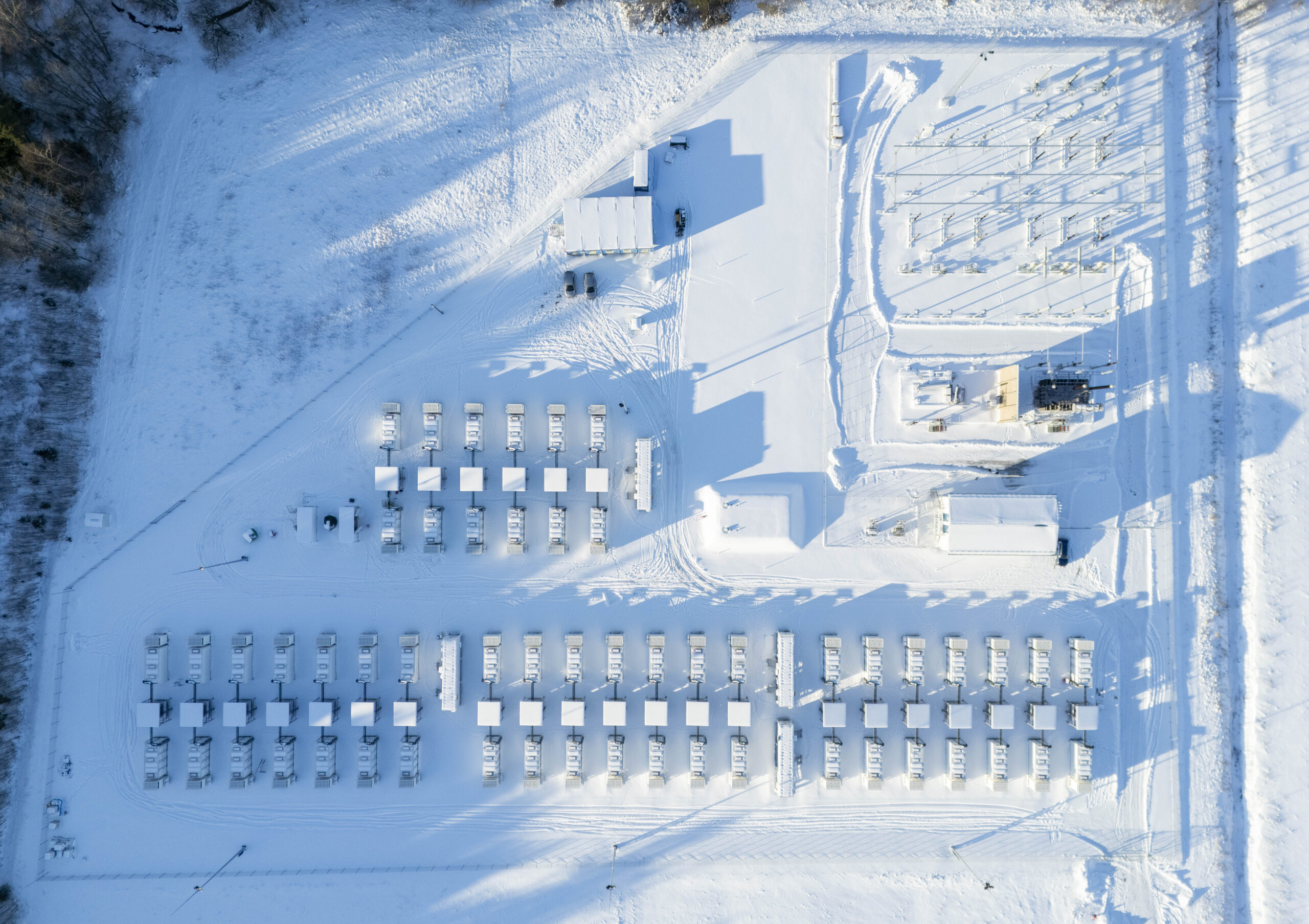
The BESS facility is based on a containerized design, with 54 containers housing a total of 2,328 battery modules. Each container integrates battery racks along with cooling, fire protection, and monitoring systems, forming a safe and self-contained energy storage unit. This modular approach allows the system to store and deliver electricity efficiently while ensuring reliable operation throughout its lifetime.

The project would not have been possible without the strong support and close cooperation of the TSO, Elering. Their expertise, engagement, and collaboration have been instrumental in enabling the successful development and integration of the BESS facility and its long-term contribution to the power system.

Industrial Execution and Strategic Partnerships

The successful delivery of Hertz 1 also reflects the strength of the project’s industrial execution and close cooperation with key technology and engineering partners, including Yuso, Connecto, Energel, and Nidec Conversion. Through strong coordination across engineering, system integration and commissioning phases, the project was delivered within an ambitious timeline and in line with the highest technical and operational standards required for large-scale battery storage infrastructure.

Michael Coudyser, CEO of Corsica Sole, added: “Hertz 1 demonstrates Corsica Sole’s ability to deliver complex, large-scale battery storage solutions in highly demanding technical environments within an ambitious and tightly managed project timeline. By leveraging our international expertise in engineering, grid integration and battery system operations, we are proud to contribute to strengthening Estonia’s energy resilience and to support the Baltic region in its sustainable integration into the European electricity grid.

The lifespan of the BESS facility will be communicated transparently. As owner and operator, we will remain fully committed throughout its 15-year lifetime, ensuring that the system reliably delivers essential services to the grid over its entire operational life.

Partner Commentary

Raphaël Lance, Global Head of Private Assets at Mirova, commented: “With the Baltics now synchronized to the European continental grid, storage is the critical link. Hertz 1 shows that grid‑scale storage is bankable at scale. As a partnership‑first investor, we mobilize long‑term capital with local developers and on‑the‑ground teams to deliver clean, reliable power and stronger energy security for the region.”

As renewable energy production continues to grow rapidly across the European Union, energy storage has become a strategic challenge for ensuring energy independence and maintaining grid stability. Large-scale battery storage systems such as Hertz 1 are essential to balancing intermittent renewable generation with consumption needs, while supporting Europe’s transition toward a more resilient, low-carbon electricity system.

Looking Ahead

While Hertz 1 begins full operations today, the Baltic Storage Platform is already well into the construction of its sister project, Hertz 2 in Aruküla. Once both are completed by the end of 2026, the combined capacity will reach 200 MW / 400 MWh, forming one of the most powerful battery complexes in Continental Europe.

Baltic Storage Platform (Corsica Sole, Evecon, Mirova) Secures Landmark €85.6 million Financing from EBRD, NIB and Edmond de Rothschild AM for one of the Largest Battery Storage Projects in Continental Europe

Baltic Storage Platform (Corsica Sole, Evecon, Mirova) Secures Landmark €85.6 million Financing from EBRD, NIB and Edmond de Rothschild AM for one of the Largest Battery Storage Projects in Continental Europe

Harju County, Estonia – 30.10.2025 – The Baltic Storage Platform (BSP) joint venture -bringing together French independent solar power producer Corsica Sole, Estonia’s leading renewable energy developer Evecon, and Mirova, an affiliate of Natixis Investment Managers dedicated to sustainable investment – has successfully secured €85.6 million in financing from the European Bank for Reconstruction and Development (EBRD), Edmond de Rothschild Asset Management, and the Nordic Investment Bank (NIB) for its two battery energy storage projects, Hertz 1 and Hertz 2, located in Estonia.

A First-of-Its-Kind Financing in the Baltic Region

This groundbreaking transaction represents the first project financing in the Baltic countries that is exclusively structured around the revenues generated by energy storage assets.

This major milestone demonstrates the private sector’s direct investment in strategic energy infrastructure, offering a concrete response to the Baltic region’s security-of-supply and energy independence challenges.

Both the EBRD and the NIB financing benefits from a first-loss risk cover from the EU under its InvestEu program.

This collaboration between multilateral institutions and private investors sends a strong signal: large-scale storage projects are now considered bankable assets capable of attracting private capital to support Europe’s energy transition.

A Strategic Project for Europe’s Energy Sovereignty

The financing will support two projects located in Kiisa and Aruküla, both approximately 25 km from Tallinn. With a combined capacity of 200 MW of power and 400 MWh of storage capacity, Hertz 1 and Hertz 2 will form one of the largest battery complex in continental Europe. These assets will play a critical role in stabilizing the Baltic power system following recent synchronization with the European grid, and in accelerating the phase-out of fossil fuels.

Hertz 1 also features a major technical innovation: connection to the 330 kV transmission network via an underground cable, — an unprecedented development in Estonia that enhances resilience and facilitates renewable integration.

Construction well underway

Hertz 1 and Hertz 2 are already well underway. Hertz 1, located in Kiisa, has been energised on October 1st 2025. with commissioning scheduled for end-2025, and the full suite of grid services expected by Q1 2026. Hertz 2 is already under construction and is scheduled to enter into operation by the end of 2026.

Quotes

“For Estonia, Hertz 1 and Hertz 2 are more than projects: they are strategic infrastructures that prove the energy transition is tangible. The imminent commissioning of Hertz 1 shows this financing is backing a real-world project already under construction.”

— Karl-Joonatan Kvell, CEO, Evecon

“Corsica Sole has built its storage expertise in French island territories and in Belgium. With Hertz 1 and Hertz 2, we are bringing this unique know-how to support European grid stability and the energy sovereignty of the Baltic states.”

— Michael Coudyser, CEO, Corsica Sole

“Mirova, who has been supporting these projects since 2024, is proud to be part of this partnership with Corsica Sole and Evecon. This closing with such reputable lenders demonstrates the bankability of large-scale energy storage, Hertz 1 and Hertz 2 in Estonia, and paves the way for a new generation of low-carbon infrastructure.”

— Raphaël Lance, Global Head of Private Assets, Mirova

“With this financing, NIB is supporting strategic infrastructure that strengthens the regional energy security and climate goals across the Baltic region. These energy storage systems are essential for energy independence, ensuring grid stability and enabling more efficient integration of renewable energy sources.”

 — Raphaël Lance, Global Head of Private Assets, Mirova

“This new investment is testament to our dedication to sustainable infrastructure and our ongoing strong partnership with Corsica Sole and Mirova. We are proud to contribute to Estonia’s renewable energy goals, which are pivotal for the Baltic region’s energy independence and sustainability. The project strengthens our infrastructure debt portfolio and reaffirms our commitment to the Energy Transition, a core priority and conviction of Edmond de Rothschild AM.”

— Jean-Francis Dusch, CIO, and Shirley Chojnacki Head of Energy of BRIDGE, the Infrastructure Debt platform of Edmond de Rothschild

“Energy storage projects not only advance the Baltic countries’ climate and renewable energy ambitions by supporting the increase of renewables in the energy mix, but they also strengthen the region’s energy security. We are pleased to have been able to support this strategic investment and look forward to further demonstrating the appeal and bankability of such projects in the region.”

— Grzegorz Zielinski, Head of Energy Europe, EBRD

Karl-Joonatan Kvell, former Development Manager, has become the new CEO of Evecon

Karl-Joonatan Kvell, former Development Manager, has become the new CEO of Evecon

The new CEO of Evecon OÜ, the largest privately owned renewable energy company in the Baltics, is Karl-Joonatan Kvell, the company’s former Development Manager.

Karl Kull has decided that Evecon has reached a stage in its development where it can move on to new challenges and he can hand over the baton to Karl-Joonatan Kvell.

Karl-Joonatan Kvell, who became the new CEO, has been working as Development Manager at Evecon since 2022 and is now responsible for the expansion of the company’s portfolio, project planning and implementation.

“Karl Kull has been a key player in building and growing Evecon,” said Aivar Mäemets, Evecon shareholder and management board member “His strategic thinking and courage to take big steps have helped us become one of the leading renewable energy developers in the region in a very short time. We wish him success in his future endeavours”.

“I’ve had the honour to lead Evecon through this period of exceptional growth – building the team, making the first big deals and implementing projects that have transformed the company and the sector,” said outgoing CEO Karl Kull. “Today, I feel that it’s the right moment to pass on the baton. This summer I’ll take some time off to recharge my batteries, and then in the autumn I’ll get back on the track.”

Karl Kull has been one of the key players in the development of Evecon in recent years and an influential voice in the Estonian energy sector. Under his leadership, Evecon has completed a number of landmark projects, including the construction of the largest battery farm in continental Europe and the largest solar farm in the Baltics.

Karl Kull’s contribution to the rapid growth of the company in recent years and its positioning as the leading renewable energy developer in the region has been significant and much appreciated.

New manager continues on the fast development track

The vision of Karl-Joonatan Kvell as the new CEO of Evecon is to continue the rapid expansion and implementation of projects in the Baltics, strengthening the company’s position as one of the most innovative renewable energy developers.

As Development Manager, Kvell focused on the high-quality and rapid implementation of projects and building an ambitious portfolio – principles that will remain at the heart of his future as the CEO.

Under the management of Kvell, Evecon will actively try to find different energy-related outputs and maximise the value of its existing development portfolio.

Evecon is a leading energy company based on private capital in the Baltic States. The company is developing an energy portfolio of more than 2.7 GW, including solar, wind farms and battery storage solutions.

A 126-ton giant transformer arrived at largest battery park in continental Europe

A 126-ton giant transformer arrived at largest battery park in continental Europe

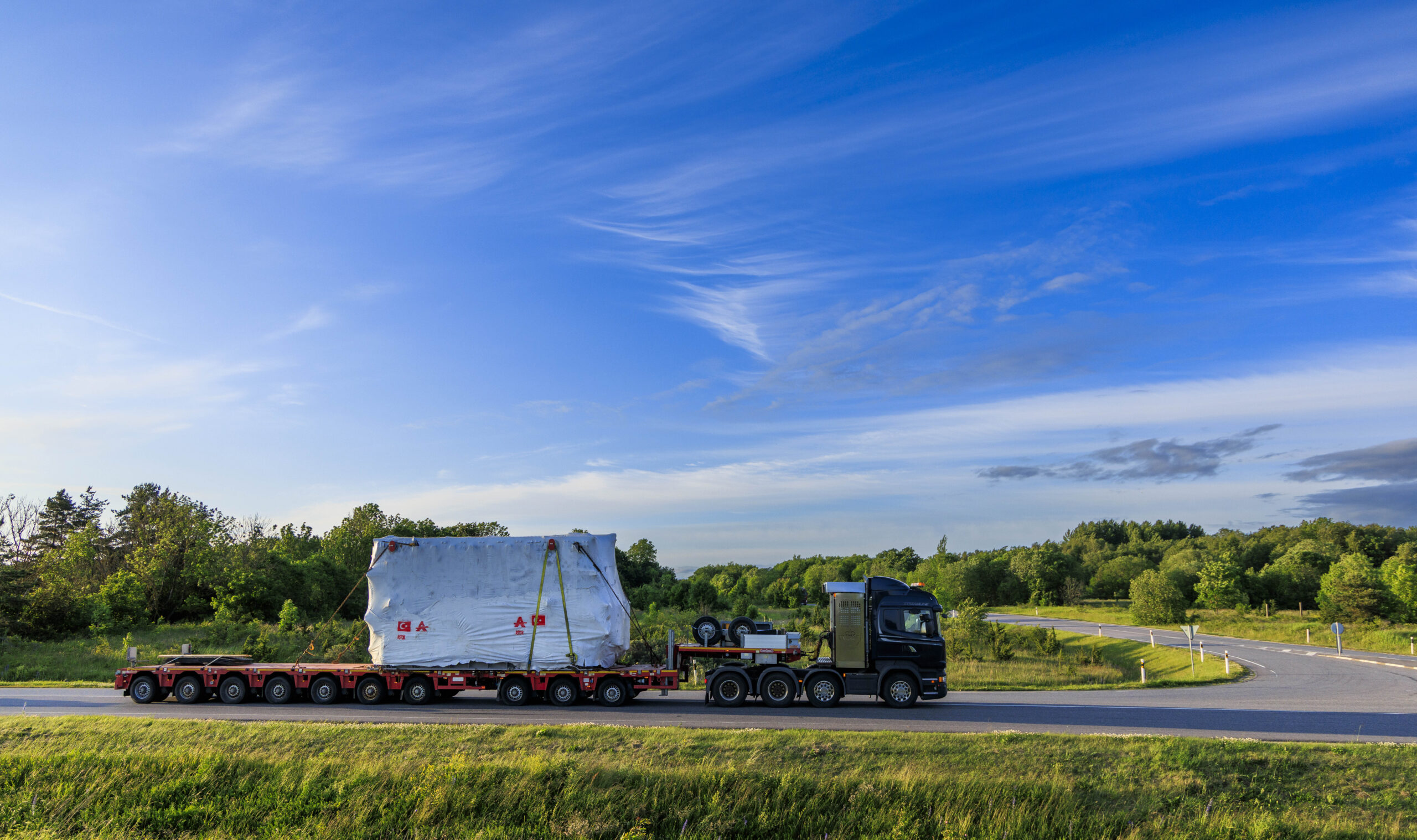
A key milestone has been reached in the construction of the largest battery park complex in continental Europe. In mid June, a 126-ton transformer was successfully delivered to the Kiisa site in Estonia by the Baltic Storage Platform, marking a major step toward commissioning this strategic energy infrastructure.

The Baltic Storage Platform is a joint venture between Estonian energy company Evecon, French solar energy producer Corsica Sole, and Mirova, a sustainable finance-focused asset manager affiliate of Natixis Investment Managers. Together, they are constructing a large-scale battery storage park in Harju County with a total capacity of 100 MW and 200 MWh. The park is expected to be commissioned in the fall of 2025.

The project involves four key partners: Connecto, responsible for building the high voltage substation; Energel, supplying the high voltage transformer; NIDEC, providing the battery technology; and WiSo Engineering, carrying out general construction works on the battery site, including installation and electrical work.

This massive transformer—transported from Turkey in a complex logistical operation—will play a central role in providing grid frequency regulation and strengthening the energy security of the Baltic states. The transformer will weigh, after being filled with oil, over 200 tons and will be approximately 10 meters high, 10 meters long, and about 6 meters wide. Its rated power is 115 MVA, operating at 330/33 kV.

In addition to the transformer, 39 out of 54 battery containers have already arrived at the Kiisa site and are being installed. These 41-ton containers, which resemble standard shipping units, are equipped with advanced cooling, heating, and fire safety systems.

“Our partners and the entire team have done a great job. Transporting a massive transformer weighing over 125 tons was undoubtedly a complex and extremely rare task for all parties involved. The challenge this time was to maximise ground pressure in connection with the underground infrastructure on site. I am happy and grateful that the transformer arrived at its destination on time. We can look forward to the future and the completion of the battery park with confidence,” said Karl Kull, CEO of Evecon.

“This type of project requires to anticipate the procurement of long-lead items from the earliest stages of development. It is a great success of our team and partner to be on schedule for this delivery, which is a complex technical equipment and a key component to be installed towards commissioning. At Corsica Sole, we are committed to high standards and our collective expertise enables us to build, a little bit more each day, a strategic energy infrastructure for Europe,” said Michael Coudyser, CEO of Corsica Sole.

The battery park substation will be the first in Estonia to connect to the electricity transmission network using a 330 kV AC underground cable, showcasing both innovation and sustainability in infrastructure development.

Once operational, the battery park will enable advanced frequency regulation for the grid. In the event of deviations in grid frequency, the batteries will rapidly respond by either absorbing or releasing electricity—ensuring a balanced and stable power system across the Baltics.

Niam Infrastructure and Evecon advance 110 MW Renewable Energy Platform in Latvia

Niam Infrastructure and Evecon advance 110 MW Renewable Energy Platform in Latvia

Total installed capacity grows to over 75 MW as new solar and energy storage projects begins construction.

Niam Infrastructure, a Nordic real assets investor, announces the launch of the second phase of its renewable energy platform in Latvia, developed in partnership with Baltic clean energy developer Evecon.

The platform was initiated in June 2024 through a joint venture between Niam and Evecon, targeting up to 110 MW of installed capacity in solar PV and battery energy storage. The construction of the first six projects, totaling 39.4 MW, is nearing completion and expected to begin delivering clean electricity to the grid during May 2025.

The second phase, now starting construction, includes an additional four projects with a combined capacity of 36.3 MW. With this milestone, the platform’s total installed capacity reaches 75.7 MW. Completion of phase two is targeted by the end of Q1 2026. WiSo Engineering, a wholly owned subsidiary of the Evecon Group, continues in its role as EPC contractor across both phases.

“This expansion reflects our strategy to invest in scalable, sustainable infrastructure that accelerates the energy transition” said Sverker Åkerblom, Founding Partner of Niam Infrastructure. “Latvia’s market fundamentals and regulatory outlook support long-term value creation, and we are pleased to deepen our collaboration with Evecon in the region.”

“Partnering with Niam enables us to realise our ambition to develop clean energy at scale,” said Karl Kull, CEO of Evecon, “We look forward to delivering this next phase and continuing to build out resilient, future-proof energy systems across the Baltics.”

Evecon is the leading privately-owned energy company in the Baltic States, developing an energy portfolio of more than 2.7 GW, with a focus on battery, solar, and wind park development. Evecon’s numerous projects include the largest solar park in the Baltics and the battery park under construction that will be the largest in continental Europe.  

About Niam Infrastructure
Niam Infrastructure focuses on sustainable investments within renewable energy, transport, and telecom in the Nordic and Northern European regions. Our first fund targets small to medium-sized investments, emphasizing asset aggregation and risk reduction in sustainable infrastructure. Supported by the European Union under the InvestEU Fund, we leverage innovation, deep knowledge, and close collaboration with our partners to drive a greener and more sustainable future.

This operation benefits from support from the European Union under the InvestEU Fund.

Evecon crowned winner of Gazelle TOP of Äripäev

Evecon crowned winner of Gazelle TOP of Äripäev

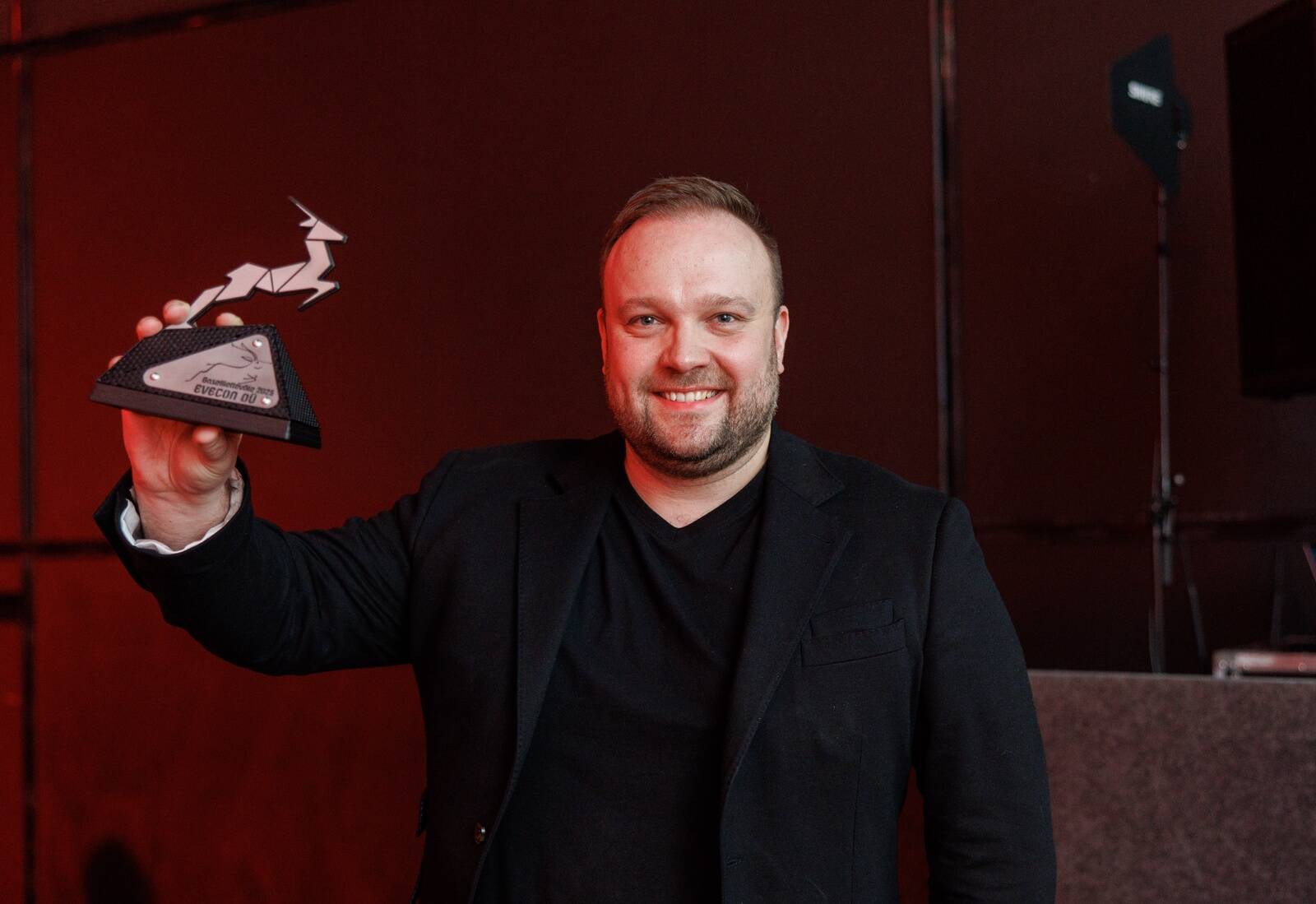
Evecon was crowned the winner of this year’s Gazelle TOP of Äripäev, as its exceptional growth and ambitious projects have made it the fastest developing company in Estonia. 

Evecon’s success figures speak for themselves – the company’s sales revenue grew more than tenfold in the comparison of 2021 and 2023, and profit increased by almost 60%. These results reflect both the large-scale developments of recent years and strategic smartness in the rapidly changing energy market.

Karl Kull, CEO of Evecon, emphasised that the rapid growth has not come from planning alone, but also from a willingness to take risks and step outside the box. He believes that bold initiative and playful thinking have contributed to the company’s development.

“Evecon has never shied away from big challenges,” said Kull. “We believe that success comes from ideas that may seem impossible at first, but which allow us to prove otherwise when implemented. It’s important not to be afraid to take the first steps and be prepared for the unexpected. A flexible and playful approach helps us find solutions even in difficult situations.”

This year, 1,300 companies made it into the annual Gazelle rankings of Äripäev. In addition to the overall win, Evecon, a company from Saaremaa, was also crowned the fastest growing company in its county.

Coming first in the Gazelle TOP strengthens Evecon’s position not only in Estonia, but in the whole Baltic region. The company will continue to expand and develop new energy projects to ensure a stable and sustainable electricity supply in the future.

Evecon – the energy company shaping the future of the Baltics

Evecon – the energy company shaping the future of the Baltics

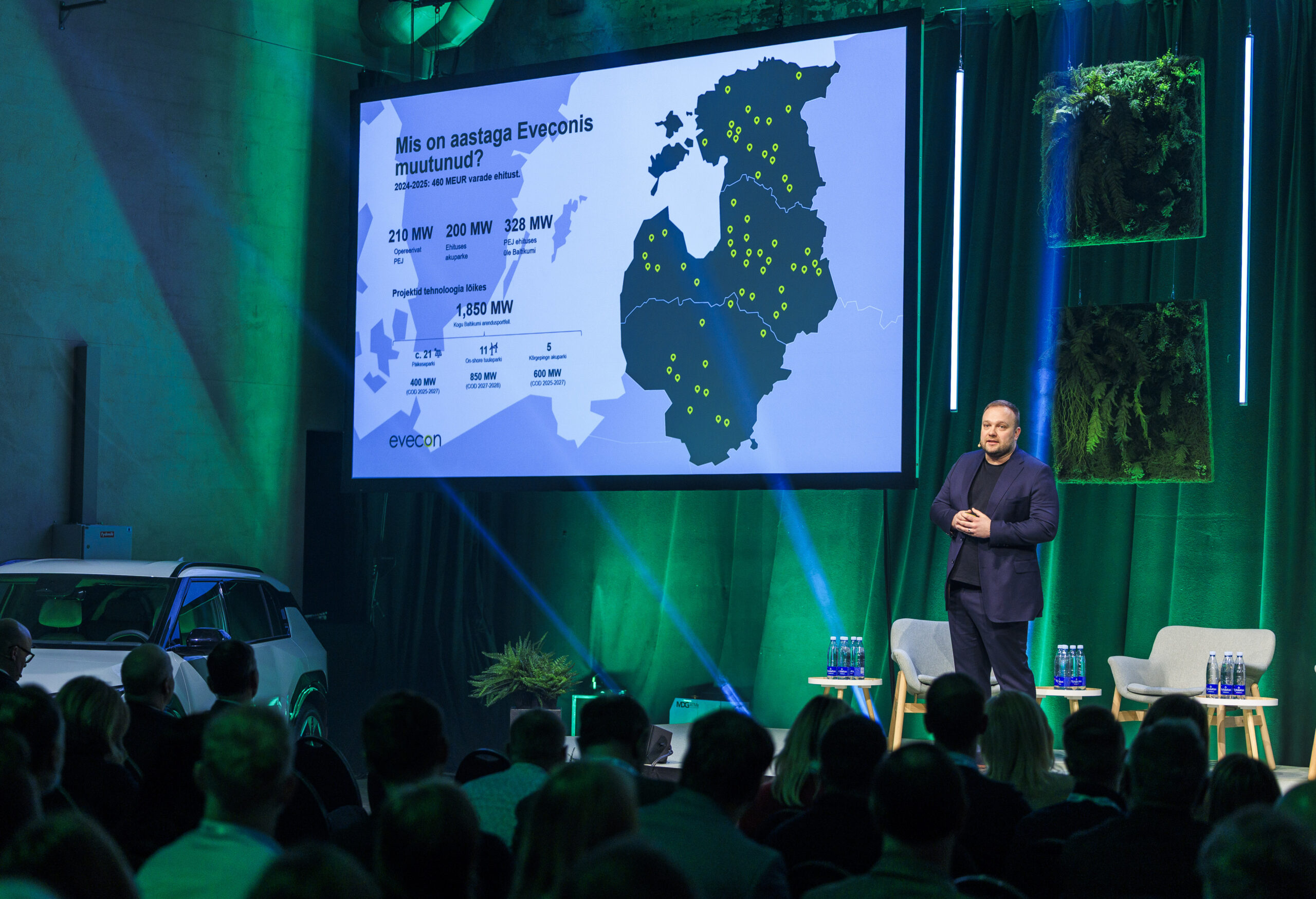
Evecon, the leading energy park developer in the Baltics, has demonstrated its strength in Estonia, Latvia and Lithuania over a short time. More than 35 projects have been completed or are under construction to date, including large-scale energy parks totalling nearly 700 MW. In Estonia alone, the construction of solar parks by companies related to Evecon in 2024 added more than 100 MW of capacity, i.e. a tenth of what is already in use in Estonia today. At the heart of the company’s energy portfolio of almost 2 GW is the development of wind, solar, battery and other energy parks.

A reliable partner

The development team of Evecon in Estonia, Latvia and Lithuania has achieved good results not only in the development of the company’s own energy parks, but also in the provision of end-development services to other customers. The company’s activities have also varied from country to country, depending on local specificities.

Niam Infra, an investment fund with a Swedish background, and Evecon established a joint venture last year and started working together to develop solar and battery parks with a total capacity of 110 MW in Latvia. This partnership with an investment fund renowned in Northern Europe will allow Evecon to strategically explore and develop new opportunities across the Baltic region.

Evecon’s developments also include the largest solar park in the Baltic states, with a production capacity of more than 77 MW, completed in Kirikmäe in 2024. The park was built in cooperation with the international investment fund Mirova, which does not make large-scale investments lightly. Yet the fund chose Evecon as its partner.

By bringing investments to Estonia, Evecon shows that as a reliable partner, it is possible to make investments successfully against the market, i.e. by taking all the risks itself, thereby saving taxpayers’ money and providing energy to consumers in the most favourable manner.

“Evecon has grown into a strong and reliable partner in the energy sector, bringing innovative solutions and large-scale projects to the market that ensure secure energy supply across the region,” said Karl Kull, CEO of Evecon. “Our cooperation with international partners helps us carry out large-scale developments that create long-term value.”

Securing the energy future of the Baltic states

Karl-Joonatan Kvell, Development Manager at Evecon, says that in addition to careful partnerships, Evecon works closely with local authorities, communities and landowners to ensure the successful implementation of projects. “Evecon was the first developer in Estonia to offer local authorities a community benefit agreement for solar power generation – 0.6% of the total cost of the plant’s production – as a voluntary step,” he said. “We are also the first to offer support to local authorities for the operation of battery parks.”

The share of wind energy developments is increasing in response to electricity market needs. Energy storage capacity is also important, as is the deployment of hybrid solutions that allows additional battery parks to be set up at the same connection points as wind turbines and solar parks.

Although we completed a number of major projects in 2024, the company has no plans to slow down. “Our plans for the near future include a number of powerful energy projects that will not only strengthen our presence in the market, but will also help secure energy stability and sustainability across the region,” said Kvell. “Major wind projects, including developments in Lääneranna, Lüganuse and Tõrva municipalities, will receive building permits in the middle of 2026 at the latest. In total, Evecon is developing wind farms in nine different municipalities.”

Developer of the largest battery park complex in continental Europe

Two battery parks with a total capacity of 200 MW and a total storage capacity of 400 MWh will be built in Harju County through the joint venture Baltic Storage Platform, founded by Evecon, the French solar energy producer Corsica Sole and the international investment fund Mirova. Kiisa battery park is scheduled to be completed this autumn and Aruküla battery park in spring 2026.

“The 400 MW battery farm complex is a ground-breaking project for energy security in the Baltic states,” said Risto Virveste, Project Manager at Evecon. “It will help to balance the energy grid, reduce dependency on external impacts and create a more stable and flexible electricity system across the region. In the event of an increase or decrease in grid frequency, the batteries help to quickly store or supply the energy needed to balance the effects of the change. This technology can be used to provide different regulation services to the system.”

Evecon has 600 MW of storage capacity in the pipeline in the Baltics today, a third of which is currently under construction. Competitive battery technology has already proven its worth, and the Evecon battery parks that will be completed in the coming years will help to provide the energy market with all the services it needs in a situation where Estonia and the other Baltic states have just joined the continental European frequency area.

Estonian energy company Evecon wants to expand newly acquired MMA league onto the international arena

Estonian energy company Evecon wants to expand newly acquired MMA league onto the international arena

The next competition – Evecon Raju 17 – of the mixed martial arts league Raju, which recently got a new owner, will take place on 22 February in the A. Le Coq Sports Hall in Tartu. The new owner wants to push for a strong international level in the series within the next few years in terms of competitors, marketing, and broadcasting.

“Raju will come of age in the next year with the 18th event to be held in the autumn; so, we have respectively established our goal of growing big. As a whole, we want to expand onto the international market. This means that we are involving ever more foreign athletes, with broadcasting due to reach other European countries in addition to those within our proximity,” said Karl Kull, CEO of Evecon OÜ. “We have successfully accomplished several major projects in the energy sector that might have appeared impossible at first glance, so I believe that we will be able to show the world the true extent of Raju.”

According to Ott Tõnissaar, main organiser of the competition and CEO of the newly founded company Evecon Raju OÜ, the transaction was somewhat unique on the Estonian competitive sports landscape. “This brand, boasting a long history, has already gathered some renown, and the transaction is the result of hard work over the last 15 years – there are no others of this kind in Estonian competitive sports history,” Tõnissaar noted.

“The provided funding and, when it comes to entrepreneurship and management, the know-how of the Evecon team, will take Raju to an entirely new level. Athletes competing in Raju highly appreciate the excellent organisation and opportunities provided by the league. Three Raju competitors have continued their careers in the UFC, the highest league in the world, one of them immediately after a match held in Estonia,” Tõnissaar said.

The organisers have finalised the blueprints for 2025 and 2026 along with the four next events, with the next two competitions to be held on 22 February in Tartu and on 20 September in Tondiraba Ice Hall, Tallinn.

The historic first event of the league was held in February 2009 in the Sports Centre of the University of Tartu. A total of 261 matches have been held throughout 16 competitions, comprising 65 professional matches and 195 amateur matches. The most distinguished foreign fighters in the league have been Bartosz Fabinski from Poland, who continued in the UFC immediately after his match with Alik Tseiko, and Zarah Fairn from France and Pannie Kianzad from Sweden, whose careers continued in the UFC somewhat later.

Mixed martial arts (MMA) is a fighting sport with the goal of determining the best fighter in a sporting environment. The fighter has to either knock out the opponent or force them into submission. MMA matches are held in specially prepared ‘cages’ surrounded with a net – in an octagonal arena – which ensures the safety of the fighters and provides the sporting duel an additional gladiatorial appeal.

Learn more here http://www.mmaraju.com

Evecon reverted part of the amendment of the Electricity Market Act

Evecon reverted part of the amendment of the Electricity Market Act

The Estonian Supreme Court satisfied the action of the energy company Evecon against the amendment of the Electricity Market Act and acknowledged that requiring a deposit for connecting to the electricity network is unconstitutional. 

The amendment of the Electricity Market Act that was passed a year and a half ago created an unexpected obligation for persons connecting to the network for generation purposes – paying a deposit to the network operator within 60 days. The deposit would not have to be paid if at least 70% of the connection fee was paid.

The amendment of legislation was supposed to expedite the transition to renewable energy, free up unused network resources and remove fictitious connection applications from the transmission network, as these were bringing about the rapid exhaustion of the transmission network volume. The judgment of the Supreme Court clarified that the amendment to legislation would in fact harm renewable energy production.

The new requirement was to apply retroactively to the network connection of large-scale projects such as that of Evecon. “The amendment of legislation created a twofold obligation: payment for the construction of the network, plus a booking fee. It did not take into consideration the circumstances for fast-growing companies, as they have successful developments pending, and due to the large volumes, a deposit would mean millions of euros that would have to be unexpectedly paid within two months and then put on hold. We did not want to go to court, especially against Elering, who implemented the amendment of legislation. However, we firmly believed that enacting such a requirement was not legitimate,” explained Karl Kull, CEO of Evecon.

“By now, for example, we have completed the largest solar farm in the Baltic countries, and in spring, we commenced the development of the biggest battery park in Continental Europe. When it comes to large-scale investments and developments, we proceed from the legislation in force and enter into agreements based on it. It is therefore important for legislative drafting not to rescind existing agreements and conditions for projects already in progress,” said Kull.

In the judgment of the Supreme Court, Chancellor of Justice Ülle Madise noted that enacting the new requirement was unconstitutional as the term provided for the market participants could not be reasonably complied with and the requirement discouraged market participants who joined the network in a purposeful manner. “The requirement was extremely burdensome with respect to the complainants as they had entered into the connection agreement at a time when such an obligation did not exist.”

The Supreme Court panel also recognised that the period for the payment of the deposit was evidently short. “Even more so in a situation where the connection fee – which had increased by several times due to the increase in construction prices – also needed to be paid.” The Supreme Court was of the opinion that providing a longer period for the payment of the deposit for companies that had been connected earlier would not have jeopardised the reduction of CO2 emissions or the security of supply of energy.

According to Ramon Rask, Partner of RASK Attorneys-at-Law, the judgment of the Supreme Court should remind the legislators of the principles of good legislative drafting and functioning rule of law. “Within the context of the multiple crises experienced in the last few years, there is a tendency to forget the rules on which a stable and functioning legal order is based in the course of legislative drafting. One of these is the principle of legal certainty and the possibility for everyone affected by new legislation to reorganise their activities within a reasonable period of time,” noted the attorney-at-law providing legal assistance to Evecon.

According to Rask, sudden and surprising legislative amendments in the energy sector but also other sectors of the economy incorporating investments with a long payback period are criminal in nature. “Unpredictable legislative drafting will bring about a sharp decline in the confidence of entrepreneurs and investors and thereby suffocate the economy.”

Even though the judgment of the Supreme Court only declared the unconstitutionality of one specific provision, Rask stated that this was part of a larger whole with the objective of commencing reforms of the energy market back in 2023. “This is not about whether the state has the right to change the rules. This is about how it is done. We need more analysis and long-term view and less overreacting.”

Evecon is the leading private equity-based energy company in the Baltic States, developing an energy portfolio of more than 2.7GW, which has so far focused on the development of wind, solar and energy storage parks. The numerous developments of Evecon include, for example, the largest solar farm in the Baltic countries and the biggest battery park in Continental Europe, with the construction of the latter having commenced in spring.

Unique underground cable line installed in Estonia for the largest battery park in Continental Europe

Unique underground cable line installed in Estonia for the largest battery park in Continental Europe

Baltic Storage Platform reached a noteworthy milestone at Kiisa in the course of the construction of the largest battery park in Continental Europe – for the first time in Estonia, a unique underground cable line operating at 330 kV voltage was installed, connecting the battery park with the connection point of the Estonian transmission network.

Two battery parks with a total capacity of 200 MW and a total storage capacity of 400 MWh will be constructed in Harju County through the joint venture Baltic Storage Platform, founded by the Estonian energy company Evecon, the French solar energy producer Corsica Sole and the French investment fund Mirova. Kiisa battery park is scheduled to be completed by the end of 2025 and Aruküla battery park in 2026. The battery parks will play a key role in the synchronisation of the Baltic countries with the European power grid.

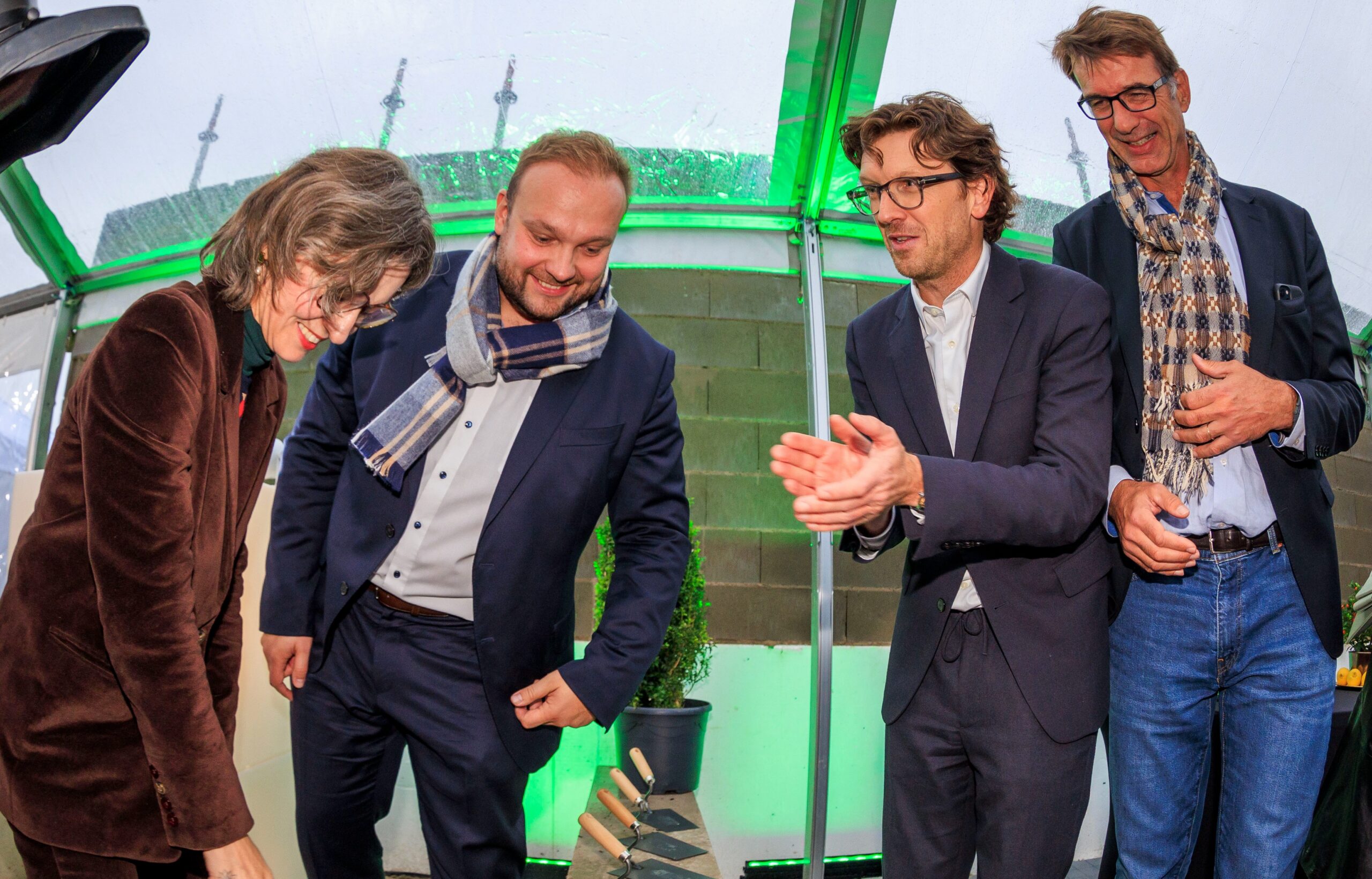
“The construction of Kiisa battery park, with its cornerstone laid in the beginning of October, has advanced according to schedule. Construction on the substation building is steadily progressing, the foundations of the equipment have been laid and the foundations of the two 330 kV power transformers have been cast,” said Risto Virveste, Project Manager of Evecon. “However, the most significant detail is that recently, Connecto Eesti installed the first 330 kV alternating current underground cable line in Estonia. Cables with an operating voltage like that have never been installed before in Estonia. Usually, 330 kV overhead transmission lines are used for such solutions.”

The cable was manufactured in the Finnish Prysmian plant – a first for Estonia. It extends to 500 metres in length and has a notable diameter of 12.5 cm, said Risto Virveste. The cable was installed between the substation of the battery park and Elering’s 330 kV substation, which is where the connection point of the battery park with the Estonian transmission network is located.

“This cable is special due to its relatively high price. But in the current case, it was a reasonable solution, as there would have been crossings with several other 330 kV overhead transmission lines between Elering’s Kiisa substation and the battery park, which would in turn render the construction work difficult and expensive, as very high towers would need to be constructed, or the 330 kV overhead transmission lines of Elering would need to be reconstructed,” Virveste explained. The special nature of the cable and the voltage class are characterised by the fact that end insulators with a total length of 5 metres need to be installed at the ends of the cable.

“The installation work of the cable proceeded as planned and thanks to excellent preparation, we completed the installation of the cable in just three days. This is a great example of the level of professionalism and technical capacity of our team. Projects like these show how innovation and professional work combined help the Estonian energy system advance with great strides. The installation of the end joints in the spring will be the next stage,” said Valmar Raigo, Project Manager of Connecto Eesti.